The conversation begins with a simple question about how people eat today, but it quickly reveals something less simple underneath it. Eating has become something many people think about constantly, but feel less and less.
Not because food is new, or because hunger has changed, but because the act of eating has been pulled into language, measurement, and optimization. What used to be immediate is now mediated. What used to be sensed is now analyzed.
There is a quiet tension in that shift: people are still eating, but the body is no longer the primary reference point.
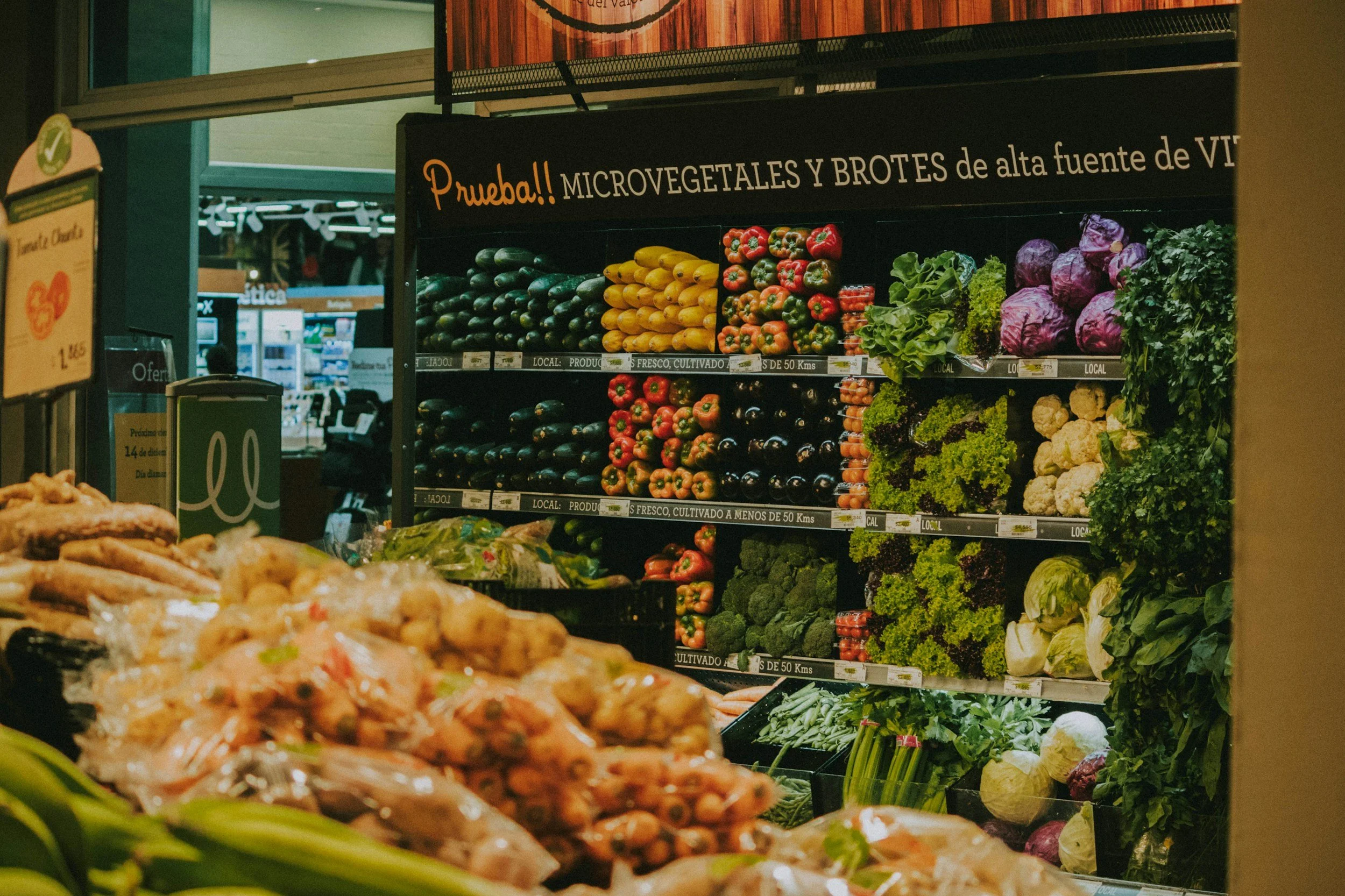
Eating Under Pressure
One of the clearest threads in the discussion is the pressure surrounding food, especially in the context of parenting. Feeding children is no longer just feeding. It becomes an exercise in correctness, timing, quantity, and confidence in decisions that rarely feel fully certain.
There is a sense that parents are operating inside a kind of pressure cooker, where every meal carries an expectation of getting it right. Questions accumulate quickly: what is enough, what is appropriate, what is healthy, what is missing.
This wasn’t always the dominant structure. Not because those questions didn’t exist in the past, but because they were competing with something more immediate: survival, routine, less informational noise. Today, those same questions are held in the thinking mind for longer, repeated more often, and rarely resolved.
The result is fatigue. Not just physical fatigue, but cognitive fatigue around something that used to be ordinary.
Within that fatigue, eating stops being a simple act and becomes something evaluated in real time.
The Return of Sensation
A shift happens in the conversation when attention moves away from nutrients and rules and toward sensation itself.
The idea of “crunch” appears almost casually, but it opens a wider frame. Crunch is not just texture. It is feedback. It is one of the ways the body confirms contact with food. It is immediate, physical, and difficult to intellectualize.
Smoothies are mentioned as an example of something that can carry nutritional completeness while removing texture. Nothing is missing on paper. But something is missing in experience.
From there, the conversation expands into the broader sensory field: taste, smell, visual presentation, and the internal sense of the body responding to food. Eating is not one signal. It is layered.
That layering includes something less commonly discussed: interoception. The body’s internal sensing system. Signals from organs, fullness, hunger, hydration, and exertion. Most of this never reaches conscious awareness, not because it is unimportant, but because it would be overwhelming if it did.
The vagus nerve is mentioned as part of this internal communication system, connecting organs and brain in a constant feedback loop. Hunger and fullness are not abstract ideas. They are physiological messages already occurring beneath thought.
When Food Bypasses Experience
A key concern raised is what happens when food no longer requires the body to participate in the same way.
Ultra-processed foods are described not simply as different kinds of food, but as systems designed to bypass parts of the eating experience. The sensory and digestive work that normally takes place is partially pre-empted by design choices made before the food ever reaches a table.
In that framing, eating becomes less of a bodily process and more of a direct stimulus-response loop. The experience is streamlined. The body is still involved, but less fully engaged in interpreting what it receives.
This is not positioned as moral judgment. It is closer to observation about how systems are built: some foods ask for participation, others reduce it.
Within that difference sits a larger question about agency. Whether food is still something chosen through bodily experience, or something that has been engineered to guide choice before awareness fully forms.
Affluence and the Loss of Hunger
The conversation turns toward a more uncomfortable realization: many people no longer recognize hunger in a clear way.
Not hunger as absence, but hunger as signal. The kind of internal clarity that once structured when and how people ate.
In its place is a different pattern. Eating becomes detached from internal cues and more closely tied to schedule, availability, and external design. Fullness and satisfaction become harder to locate, even when food is abundant.
This is described as a kind of disconnection that comes with affluence. Not simply having more food, but having more access to food that does not require the same internal engagement.
At the same time, there is acknowledgment that this is not a simple loss. The system is complex: agriculture, processing, distribution, and the economic structures that shape what is available and why.
Industrial farming is referenced in terms of soil, crop diversity, and nutrient density. Bigger produce is not necessarily more nutrient-dense produce. Soil health, crop variety, and chemical inputs all shape what eventually arrives on a plate, even if none of that is visible at the point of eating.
Noticing Without Overcorrecting
The discussion shifts from systems back to the individual level, but without moving into correction or instruction.
The question becomes what it would mean simply to notice.
Noticing what is enjoyable about eating. Noticing what happens in the body during a meal. Noticing texture, speed, and attention. Noticing the difference between eating something like an apple and eating something fast, without turning that observation into immediate judgment or change.
Even fast food is not excluded from observation. The point is not to assign it a fixed meaning, but to notice its effect: why it is experienced as pleasurable, what design choices contribute to that response, and how awareness changes when those mechanisms are seen more clearly.
There is also an observation about speed. The speed at which food is consumed becomes part of the experience itself. A large portion of fast food can be eaten quickly in a way that contrasts sharply with the pace of foods that require more time to chew and process.
Awareness here is not positioned as a tool for optimization. It is framed more simply as seeing what is already happening.
Modeling, Not Explaining
The conversation briefly turns toward parenting again, but in a different register.
Children are not only listening to instructions. They are observing patterns. Emotional tone at the table, presence during meals, and how food is treated all function as signals.
Explanation is not absent, but it is not primary. Behavior carries its own transmission.
There is a recognition that over-explaining can sometimes replace presence. That trying to translate every action into language can interrupt the more direct form of learning that comes from observation.
Closing
The conversation ends without resolution, returning instead to a smaller frame: one meal, one moment, one instance of attention.
A reminder that eating still contains sensory information that can be noticed if it is not bypassed by habit or abstraction. Crunch, taste, speed, fullness—each as signals rather than concepts.
Nothing is concluded in a fixed way. The systems remain complex. The body remains capable of sensing. Between those two realities, the only stable point is awareness of what is actually being experienced in real time.