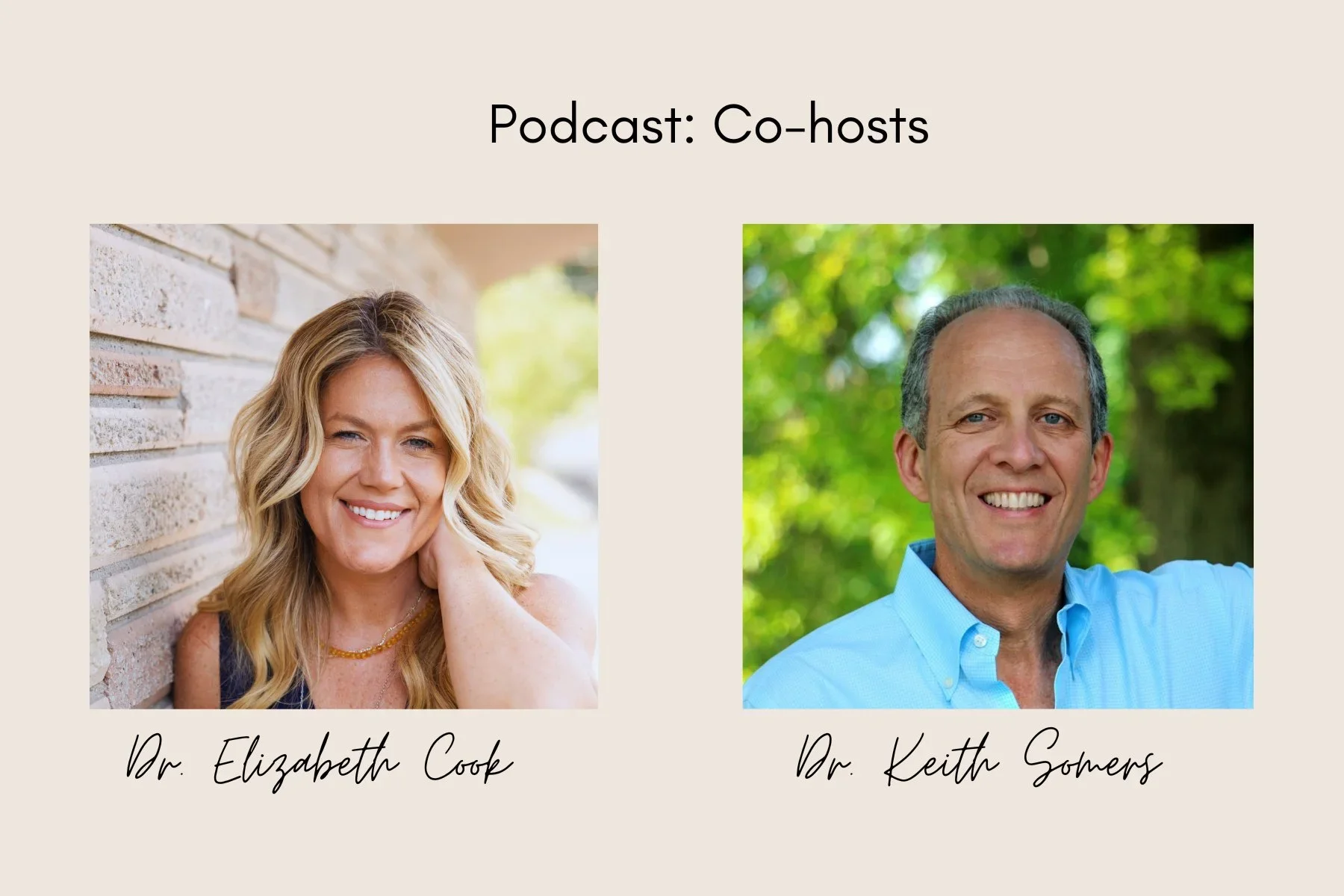
In my work and in my conversations with Dr. Keith Somers, I have learned that most people have not truly paused to reflect on what this actually means in real life.
In this episode of Illuminating Being, I sat down with Dr. Keith Somers to explore this idea more deeply, especially through the lens of children, families, and long term health.

Moving beyond a buzzword
“Food is medicine” sounds powerful, but it can also become misleading when it is oversimplified. In our conversation, we explored how this phrase is often treated like a quick fix. As if eating a certain way will automatically solve everything.
But health is not that simple.
What I really want families to understand is that food is not a prescription. It is not a single intervention that fixes a single problem. Instead, food is part of a much larger system that includes lifestyle, environment, habits, stress, and emotional wellbeing.
Food as nourishment, not a cure all
One of the most important ideas we discussed is the difference between food as medicine and food as nourishment.
Food supports the body. It helps development, energy, focus, and growth. But it does not operate in isolation and it does not override every other factor in a child or adult life.
When I think about children especially, I see how their development is shaped not just by what they eat, but also by their daily experiences, their routines, and the environment around them. Their nervous system, mood, and behavior are all influenced by a combination of inputs.
Food matters, but it is part of a bigger picture.
Returning to simplicity
One theme that kept coming up in our discussion was the need to return to simplicity.
We live in a time where food is highly processed, heavily marketed, and often disconnected from its original form. At the same time, families are overwhelmed with advice, rules, and trends about what to eat and what to avoid.
What I have seen over time is that most people do not need more complexity. They need grounding.
Simple principles still matter. Real food matters. Whole food matters. Eating together as a family matters. These are not new ideas, but they are often forgotten in modern life.
Children learn through experience
One of the most powerful parts of this conversation for me is how early food habits are formed.
Children are constantly learning through observation and experience. What they see, what they are offered, and how food is talked about all shape their long term relationship with eating.
This is why I believe curiosity is more powerful than control.
Instead of forcing or shaming children around food, we can invite them into awareness. We can help them notice how different foods make them feel. We can create space for exploration instead of pressure.
Food becomes part of learning, not just behavior management.
The role of family and environment
We also talked about how food is rarely just about nutrients. It is also about connection.
Family meals, shared conversations, and the environment around eating all influence how children relate to food. These moments build emotional safety, connection, and rhythm in daily life.
In many ways, the table is just as important as the food itself.
A gentle reminder for parents and caregivers
If you take one thing from this conversation, let it be this.
You do not need to approach food with fear or extremes.
You do not need to turn every meal into a clinical decision.
Instead, focus on awareness, consistency, and simplicity. Focus on real food when possible. Focus on connection when you can. And trust that small, steady choices matter more than perfection.
Final reflection
Food is not just medicine. It is not just fuel either.
It is part of how we live, grow, connect, and develop.
When we step away from buzzwords and return to the basics, we can begin to see food for what it truly is. A daily opportunity to support life in a grounded and human way.
Thank you for being part of this conversation with us on Illuminating Being.